Measurements, knowledge and human judgement.
BRAD's approach brings local observations into a continuous process of understanding and decision-making.
A continuous loop, with the grower inside it.
- 1
Measure
Observe local conditions through field measurements.
- 2
Interpret in context
Connect measurements with agronomic knowledge, crop conditions and production goals.
- 3Grower
Discuss with the grower
Bring in first-hand observations, experience and questions.
- 4Grower
Decide and act
The grower uses this understanding to choose an appropriate response.
- 5Grower
Observe and refine
Review what changes and use those observations to inform the next decision.
Observe and refine → back to Interpret in context. What the grower sees in the field becomes part of the next reading.
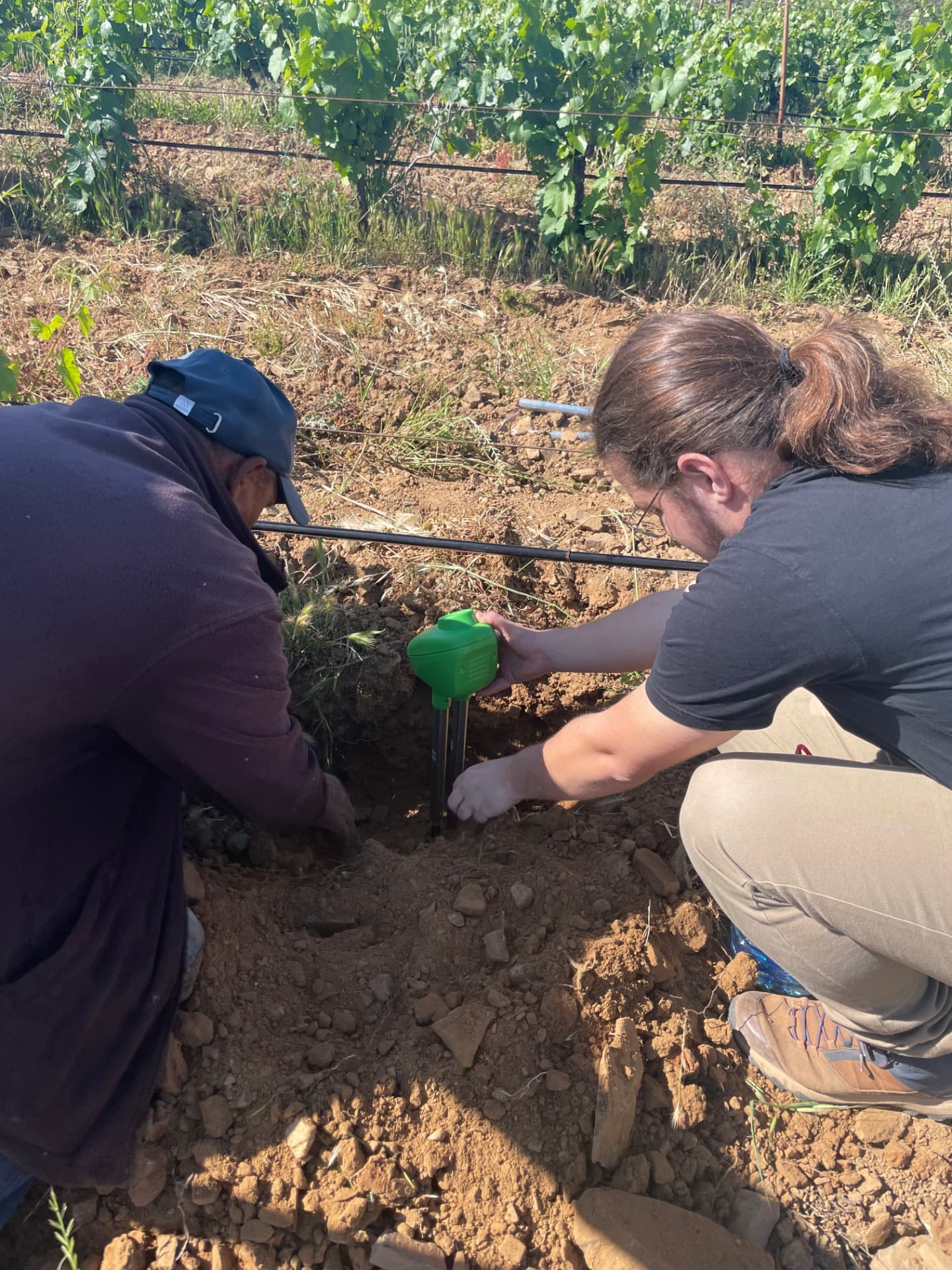
Local sensing
The BRAD probe is the enabling infrastructure behind the approach. It covers:
- — Soil moisture and temperature at multiple depths.
- — Air and light measurements.
- — Observations tied to their measurement location.
These measurements describe conditions where the probe is installed. They do not provide an exhaustive picture of the whole field.
Agronomic interpretation
A number alone rarely answers a question. BRAD reads measurements alongside agronomic knowledge — how crops respond to water, temperature and light at different stages — and alongside what the grower knows about the plot.
Ask questions. Add what you observe.
BRAD's voice-AI approach is designed around a two-way exchange: asking about measurements and bringing the grower's observations into the conversation.
- « What has changed since my last visit? »
- « Which measurements explain this alert? »
- « I can see signs of stress here. What do the measurements show? »
Illustrative questions. Ask BRAD about current availability.